Hanging Wallpaper Over Painted Walls
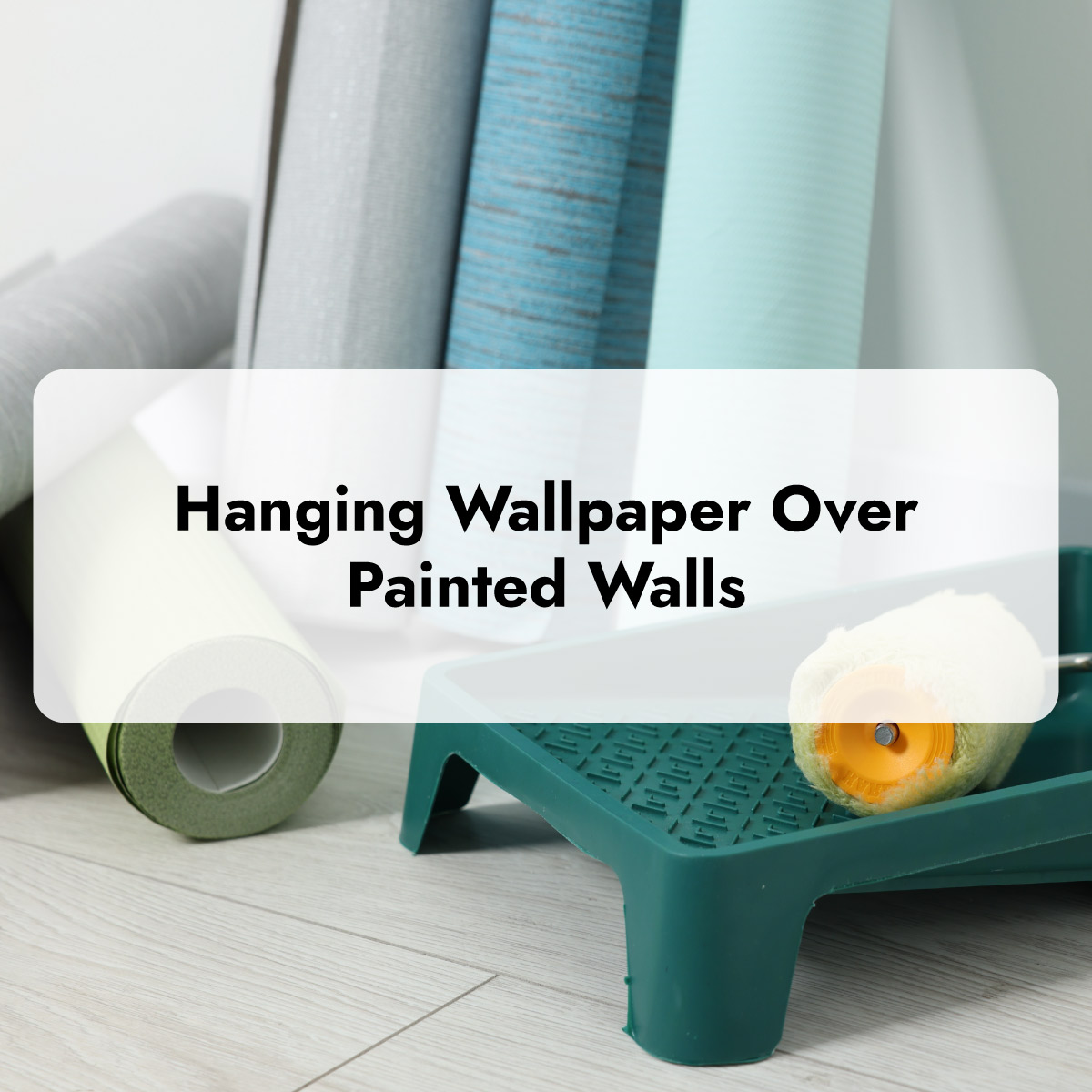
Wallpaper over paint is not only possible, but also very common. Whether you’re installing non-pasted, pre-pasted, peel-and-stick, grasscloth, or another type of wallcovering, the underlying surface should be clean, dry, smooth, stable, and properly prepared. One factor that can affect the preparation process is the type and finish of paint already on the wall.
Household paints generally fall into two categories: water-based coatings and oil-based coatings. Latex and acrylic paints commonly fall into the water-based category. However, identifying the paint type is only part of the process. Its condition, age, sheen, and how securely it is bonded to the surface can have an even greater effect on wallpaper adhesion.
A sound, properly cured painted wall can provide an excellent substrate for wallpaper. A peeling, chalky, contaminated, or very glossy painted surface cannot.
Let’s look at the most common paint types and what they mean for wallpaper installation.
Can You Put Wallpaper Over Water-Based Paint?
Yes. Wallpaper can generally be installed over properly cured and well-adhered water-based paint.
Water-based paint uses water as the primary carrier for its pigments and binder system. Most modern interior wall paints fall into this broad category, including many products marketed as latex or acrylic paint.
Before installing wallpaper, make sure the paint has fully cured, not just dried to the touch. Drying and curing are different processes. A freshly painted wall can feel dry while the coating is still developing its final hardness and adhesion. Follow the manufacturer’s recommended curing time before installing wallpaper.
Paint sheen also matters. Flat and matte finishes generally have a less slick surface, while eggshell, satin, semi-gloss, and gloss coatings become progressively smoother and less porous. A very smooth or glossy surface can reduce some wallpaper adhesives’ ability to form a reliable bond.
Glossy surfaces may therefore need cleaning and light abrasion or deglossing before wallpapering. Then use a compatible wallpaper primer to create a more uniform surface for installation.
Most importantly, check whether the existing paint is firmly bonded to the wall. Wallpaper adhesive cannot compensate for a failing coating. If the paint is peeling, flaking, blistering, or separating from the substrate, repair those areas before installing wallpaper.
This is particularly important with removable and peel-and-stick wallpaper. “Removable” describes the wallcovering and its adhesive. It does not guarantee that weak or poorly bonded paint will remain attached to the wall during removal.
Can You Put Wallpaper Over Oil-Based Paint?
Yes, but surfaces painted with oil-based paint typically require more careful preparation.
Traditional oil-based paints form relatively hard, dense coatings after curing. They have historically been used on surfaces where durability and washability are important, such as trim, doors, cabinetry, and some walls.
The main concern when wallpapering over oil-based paint isn’t simply that the paint contains oil. It is the hard, low-porosity, and often glossy surface produced by many of these coatings.
Wallpaper adhesives generally perform better when they can form a reliable bond with the substrate. A very smooth, glossy coating can interfere with that bond.
Before wallpaper installation, thoroughly clean the surface to remove grease, dirt, soap residue, and other contaminants. Glossy coatings generally need to be lightly sanded or otherwise deglossed. Then, remove all sanding dust.
Afterward, apply a wallpaper primer that is compatible with both the existing coating and the chosen wallpaper adhesive. This will create a more suitable and consistent surface for installation.
As with water-based paint, the existing coating must also be firmly attached to the substrate. Repair loose, peeling, or otherwise failing paint rather than covering it with wallpaper.
Can You Put Wallpaper on Latex Paint?
Yes. Properly prepared latex-painted walls are generally suitable for wallpaper.
The terminology can be confusing because modern latex paint usually does not contain natural rubber latex. In the paint industry, “latex” commonly refers to water-based emulsion paints in which synthetic polymer particles form the paint film as the coating dries and cures.
Depending on the formulation, these binders may include acrylic, vinyl-acrylic, or other synthetic polymers. That is why “latex,” “acrylic,” and “water-based” shouldn’t be treated as completely separate categories.
Before installing wallpaper over latex paint, first make sure the coating has fully cured and is securely bonded to the wall.
Next, consider the finish. A sound matte or flat latex-painted surface may require relatively little preparation beyond cleaning and applying the appropriate primer recommended for your wallpaper system. Satin, semi-gloss, and glossy finishes are less porous and may need light abrasion or deglossing.
After sanding, remove all dust before applying primer or installing wallpaper.
Using a compatible wallpaper primer is often beneficial because it creates a more consistent surface for the wallpaper adhesive. It can also help isolate the wallpaper adhesive from the underlying paint and may make future wallpaper removal easier.
Can You Put Wallpaper Over Acrylic Paint?
Yes. You can generally install wallpaper over acrylic-painted walls once the coating is fully cured, stable, clean, and properly prepared.
Acrylic paint uses acrylic polymers or copolymers as part of its binder system. Many architectural acrylic paints are water-based, which means acrylic paint should not automatically be considered a separate category from water-based paint.
In fact, the terms used on paint labels can overlap. A product may simultaneously be described as water-based, latex, and acrylic depending on its formulation and how the manufacturer markets it.
For wallpaper installation, the exact terminology on the can is therefore often less important than the properties of the finished coating.
Check that the acrylic coating is firmly bonded and has fully cured. Clean the wall to remove contaminants that could interfere with adhesion. If the coating is satin, semi-gloss, gloss, or otherwise particularly slick, lightly abrading the surface can improve the mechanical bond of the subsequent primer or adhesive system.
Remove all sanding residue and apply a wallpaper primer when recommended by the wallpaper or adhesive manufacturer.
Do not wallpaper directly over acrylic paint that is peeling, blistering, cracking, chalking, or otherwise failing. The wallpaper will ultimately depend on the bond between the paint and the wall underneath it.
What Matters More Than the Type of Paint?
Although knowing whether you’re dealing with water-based or oil-based paint is useful, the surface condition is usually the more important consideration when preparing a painted wall for wallpaper.
Before installation, check that the wall is:
- Fully cured – recently applied paint may be dry to the touch long before it has completely cured.
- Firmly bonded – repair peeling, blistering, or flaking paint first.
- Clean – grease, dust, soap residue, and other contaminants can interfere with adhesion.
- Smooth – bumps, holes, cracks, and heavy texture may remain visible beneath the wallpaper and interfere with adhesion.
- Free of excessive gloss – slick surfaces may require cleaning, deglossing, or light abrasion.
- Properly primed when required – use a primer compatible with the existing coating, wallpaper material, and adhesive system.
Always follow the specific installation instructions supplied by the wallpaper, adhesive, and primer manufacturers, as preparation requirements can differ between products.