Summer Skye Studio: From Side Hustle to POD Wallpaper Brand Owner
I spent most of my working life as an accountant. Analytical, process-driven, good with spreadsheets. Not the obvious candidate for wallpaper designer.
But life has a way of changing your perspective on things. Mine shifted in a way I hadn’t expected, and when it did, I found myself wanting something different. Not because I hated my job. More than I wanted to manage my own time, answer to myself, and build something that was mine. I’m not great at being told what to do. Never have been.
So, I went back to something I’d always had but never properly used: a creative side. Art lessons online, mostly through Skillshare, fit around evenings and weekends. And then I stumbled across surface pattern design, and discovered that Spoonflower existed, and that you could upload your patterns and sell them!
That was about four years ago. What started as a hobby turned into a side hustle, and it’s now becoming a business I genuinely believe will fully support me within the next couple of years.
But it didn’t happen overnight. And it didn’t happen without a few wrong turns.

The crickets phase
I uploaded my first designs to Spoonflower and waited.
Nothing. For about six months, nothing.
My first sale, when it came, was a wallpaper sale. I was surprised by the commission. Then it went quiet again. Honestly, I wasn’t devastated. I still had a full-time job, but there was a moment somewhere in that year where I thought: I want to actually do this. Not as a side project. As a real thing. And that meant doing it properly.
I joined Erin Kendall’s Power Sellers Academy, a membership focused on building a Spoonflower shop that actually sells. The difference wasn’t just the tactics. It was understanding how to design with selling in mind, not just designing because I liked it. Sales started coming. Momentum built. And eventually, I opened an Etsy shop.
My first year on Etsy was genuinely good. Good enough that I started to think bigger.
The nagging feeling
Here’s the thing about Etsy, and Spoonflower for that matter: they’re not your business. They’re someone else’s platform. You’re a guest.
I was doing well, but most of my sales were going to the US. I’m based in Portsmouth, on the south coast of England, and I had this persistent feeling that I was missing my home market. UK customers are waiting weeks for delivery. Parcels potentially stuck in customs. It bothered me more than it probably should have.
I wanted UK and EU customers to get their orders quickly, without nasty surprises at the door. And I wanted the business to really feel like mine.
That’s when I started looking for a different way to do things.
Why I chose Fancy Walls
Someone else in my membership was already working with Fancy Walls. She’d built her dropshipping business with them from scratch, which was a slightly different situation from mine; I was switching from an existing setup, but she spoke well of them, and that counted for something.
I did my own research too.
The shipping speed was the first thing that stood out. Fast turnaround, DDP shipping to the UK, EU, US, and Canada. No customs surprises for customers. No one has to unexpectedly pay import fees on a parcel they’d been excited about. That mattered to me.
Then I ordered samples. The quality was genuinely better than I expected. The samples are notably large, much bigger than most, which is the right call for wallpaper. It’s an investment purchase. People need to see the actual pattern, hold it against their wall, live with it for a few days before committing. A proper sample makes that possible.
But the thing that sealed it? The packaging.
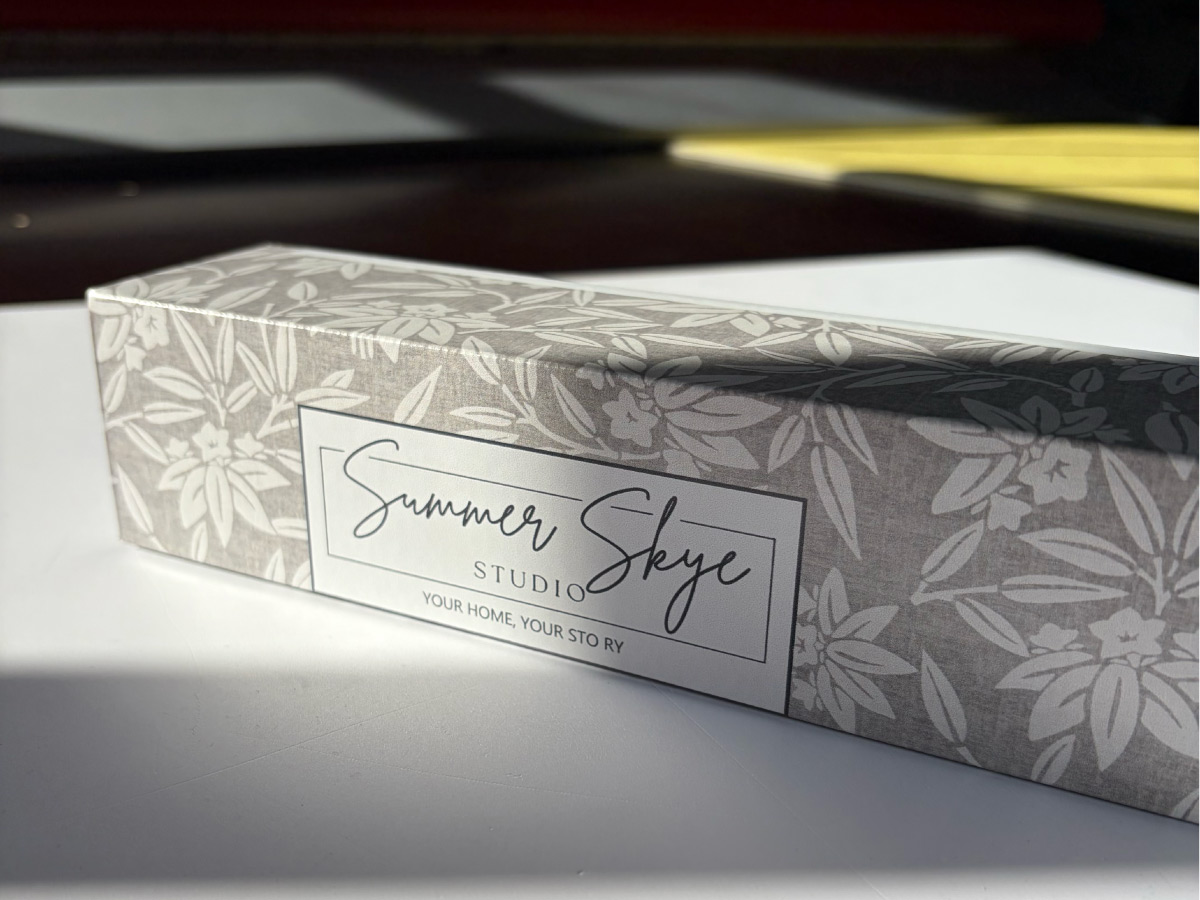
I could have my own branded boxes. It sounds like a small thing. But after years of dropshipping with someone else’s name on the parcel, having a box arrive at a customer’s door with my branding on it felt like something had properly shifted. This was my business.
I was so excited designing that packaging. Probably more excited than I should admit.
Making the switch, what I wish I’d known
Here’s the honest part, and the reason I’d tell anyone switching production partners to go in with their eyes open.
I came from Spoonflower. My entire back catalog was built around their print specifications. Fancy Walls print differently, different DPI requirements, different repeat sizing, and different ways patterns tile. Most of my designs needed reformatting before they were ready to go live.
It was, to put it diplomatically, a pain in the backside. Not something I’d relish doing again.
If you’re brand new to dropshipping and building from scratch, you won’t have this problem. You can spec your designs correctly from the start. But if you’re switching, do your homework first. Understand the technical requirements before you commit, not halfway through reformatting design number forty-seven.
That said, Fancy Walls offers a scaling feature via the API, which helped me reformat many designs without having to start from scratch. And the onboarding call was genuinely useful. They helped me get set up properly, which also forced me to sort out my own file organization. Pre-Fancy Walls, my files were a polite disaster. Turns out accountants don’t always practice what they preach.
How it runs now
I sell through both Etsy and my own Shopify store, both integrated with Fancy Walls via their API. An order comes in, goes through automatically, gets printed, is packed in my branded box, and is dispatched. I can check the status through the dashboard. I can make amendments within the available window. I don’t have to chase anyone.
I remember stalking that first order move through the system. Queue. Printing. Dispatched. Then going to check my Etsy shop and seeing it’s marked as complete. I hadn’t done a thing.
That was the moment it clicked.
The UK and EU orders are coming in now, which is exactly what I wanted. I’m designing with that audience in mind; my next collection is inspired by where I live, on the south coast. The full roll pricing is genuinely good value, especially with free shipping factored in, and the level of service has been better than I expected.
I don’t feel like a number, I feel like a partner.
If you’re thinking about making the move
Choose your production partner carefully. Order samples before you commit. Engage with them, ask questions, and make sure they’re the right fit for your customers.
If you’re switching from an existing setup, account for the reformatting work. It’s doable. Just don’t underestimate it.
And if you’re starting from scratch? You’re in a better position than you might think. Build it right from the beginning, and the technical side is much more straightforward.
There’s always a learning curve. But once you’re over it, it genuinely runs itself.