Dark Academia Aesthetic – How to Design a Scholarly Space

Dark Academia is a genre that has taken the internet by storm. Pinterest mood boards brimming with moody libraries, chessboards, coffee mugs, handwritten notes, and rain-soaked streets reflect its rising popularity. As this aesthetic grows, its true core concepts can seem difficult to define. Originally a niche online subculture of the mid- to late 2010s, Dark Academia has evolved into a distinguished design movement that now influences fashion and interior design alike.
At its core, this aesthetic romanticizes intellectual curiosity and old-world charm, blending scholarly ambition with a quiet nostalgia for a time that felt slower and more restrained. It evokes an era when lighting was warm and yellow-toned, almost amber, emotions were expressed with subtlety, and life unfolded at a more deliberate pace, as if destiny were prewritten. While this can evoke a sense of dread or loss of freedom, there is also a certain softness to it, more precisely, in the atmosphere surrounding it. There is a hazy comfort in imagining light coming from desk lamps and candles rather than harsh overhead LEDs. It’s also comforting to imagine having your choices laid out in front of you and not having to worry about the 100 what-ifs.
Dark Academia celebrates late-night study sessions, handwritten notes in satchels, and grand libraries filled with dust and history. It acknowledges the bolder, more complicated chapters of the past. The intellectual revolutions, the philosophical debates, and the artistic movements that challenged norms and redefined thought.
It is precisely this emotional and intellectual depth that underlies this aesthetic. That is why we will delve deeper into the principles of this genre, breaking down its visual elements – from moody color palettes to meaningful wallpaper – to tie all these pieces together and make a room ready for deeper thinking and feeling.
Inspiration for Dark Academia
Imagine being a student – not with a laptop and constant notifications, but with a worn leather satchel full of loose papers, scattered pens, and an old textbook. Picture walking through a foggy campus on an early spring morning, the air crisp, your thoughts on both deadlines and the vastness of the world.
A key film of this aesthetic is Dead Poets Society. It captures intellectual awakening and youthful intensity, as shaped by writers such as Oscar Wilde, Edgar Allan Poe, Virginia Woolf, and Fyodor Dostoevsky. In contrast, today’s reading culture often takes cues from fast-paced recommendations on TikTok, focusing on questions like how “spicy” a book is, a trend marked by the pepper emoji to visualize the “hidden” meaning behind the basic premise of this work.
While there is nothing wrong with reading for entertainment, many technology-driven recommendations today, often paired with loud slogans urging users to read certain titles immediately to “achieve” the aesthetic, have, in many ways, misled people about how to truly embody this look, especially in interior design. Dark Academia has been reduced to a checklist: buy these books, stack them on a desk, add a candle, and you’re done. But that approach misses the point entirely.
Dark Academia Interior Elements
Before rearranging furniture, it is important to understand the fundamental elements that translate this emotional intensity and depth into a real, physical space. While the obvious choices are dark colors, soft lighting, books, and wood furniture, the way you make them work will be the difference between a cramped, dark room and a place where time seems to have stopped, and academic thinking begins.
When imagining Dark Academia interior elements, people often mix this aesthetic up with Gothic interiors. While they do share a love for dramatic tones and historical references, Dark Academia is more about intellectual romance than ornate darkness. It draws inspiration from classical architecture, vintage libraries, and European universities rather than medieval cathedrals.
Color Palettes in Dark Academia
Color palettes are the most important part of this room transformation. While yes, Dark Academia leans into dark colors, there’s another crucial level to it. For example, black can create a claustrophobic feeling, making the room feel cramped and depressing, which we don’t want. On the other hand, dark pastels often fall short because they lack the richness and gravitas that define the style. We want the space to feel moody and to inspire some level of thought, not just the idea of how to get out of there.
Some of the best color options for achieving this look include:
Dark Brown. A color that appears black in certain lighting but doesn’t feel quite as stark or soulless. Unlike true black, which can flatten a space and absorb all warmth, these tones carry subtle undertones of red or umber. In dim evening light, they read almost black. But during the day, or under warm lamplight, their richness becomes visible.

Rich, grounding, and quietly dramatic, deep forest green carries the weight of history. It evokes red velvet armchairs and heavy curtains drawn against a rainy afternoon. This tone feels permanent. It’s rooted in refinement. It has the rare ability to be both scholarly and luxurious.

If you don’t want your space to feel overly dark, warm charcoal is an ideal choice. It carries subtle brown or taupe undertones that soften its intensity, preventing the room from feeling too enclosed. Rather than absorbing all light like black, it reflects just enough warmth to maintain depth without creating an overly gloomy atmosphere.

A quiet shade, inspired by aged wine, antique tapestries, and the quiet drama of study rooms, is a muted burgundy. There is emotion in this shade, as red always brings a certain energy, maybe even anger, to a room, but unlike true red, burgundy is restrained, thoughtful, and refined rather than loud.

Pattern Choices in Dark Academia
With the colors established, it’s time to turn to the prints. They are what truly personalize the space. Keep in mind that while the palette sets the mood, prints add narrative and introduce individuality. Below is a closer look at the Dark Academia pattern and style directions that define the aesthetic and give it character.
Botanical
One of the most classic wallpaper prints across many aesthetics is botanical imagery. However, what distinguishes botanicals in the Dark Academia aesthetic is their source of inspiration. The motifs often draw from old medical textbooks, scientific journals, and archived studies.

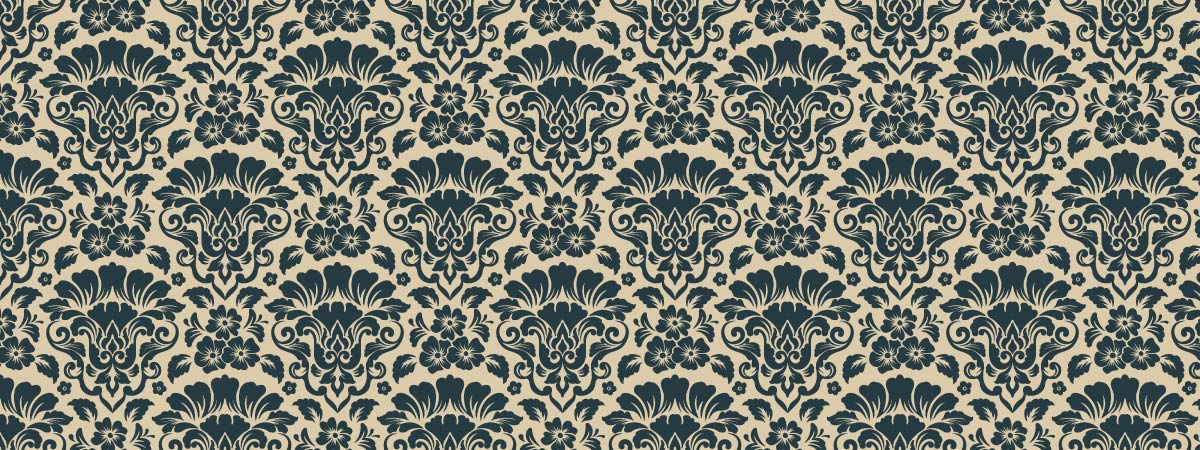
Damask
Similar to botanicals are the Damask motifs. A fun fact, however, is that this pattern has been around a while, specifically since 16th-century England. These patterns carry an ornate, old-world elegance – grand halls, long, heavy drapes, and candlelit rooms filled with antique furnishings.
Plaid
A more modern twist on traditional flower patterns is plaid, which experienced a major resurgence in the 1970s. During that decade, plaid moved beyond its Scottish roots and became a prominent element in upholstery, wallpaper, and fashion alike.
In Dark Academia interiors, plaid serves as the perfect bridge between old and new. It carries academic tradition while introducing a slightly relaxed, lived-in charm that keeps the space from feeling overly formal. When executed in muted tones and designed with tighter, more refined grids, it feels scholarly rather than retro.

Authors choice
While sticking with plain walls is a safe option, wallpaper will give it a more old-school vibe, which often embodies this aesthetic. With characters set in big castles, small cottages, and grand study halls, this will give your home the Dark Academic vibe it deserves. By combining these selected color schemes with previously mentioned patterns, the result is a collection of some truly perfect Dark Academia wallpaper designs to make your home look like a scholar’s dream. Below, you’ll find the author of this article’s favorite designs from the Fancy Walls Dark Academia collection.
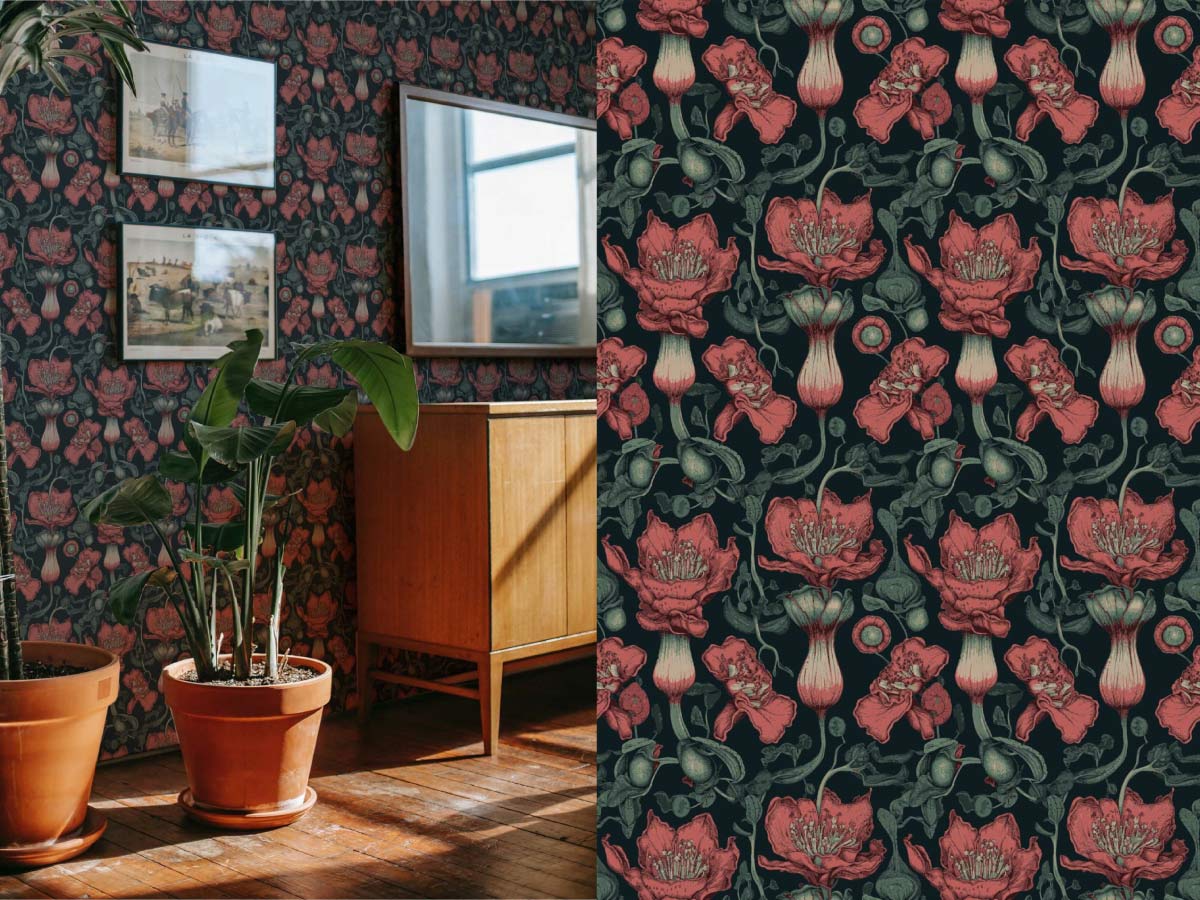
Earthy Brown Elegance
A botanical style that comes to life through its moody floral pattern, layered in rich burgundy, deep green, and earthy brown tones. The design appears to have been lifted from the pages of an antique herbarium, then modernized to accentuate its dramatic presence.
Under warm lighting, the darker tones will soften and blend, creating an intimate atmosphere. In natural light, the layered greens will prevent the pattern from feeling flat or overly busy.
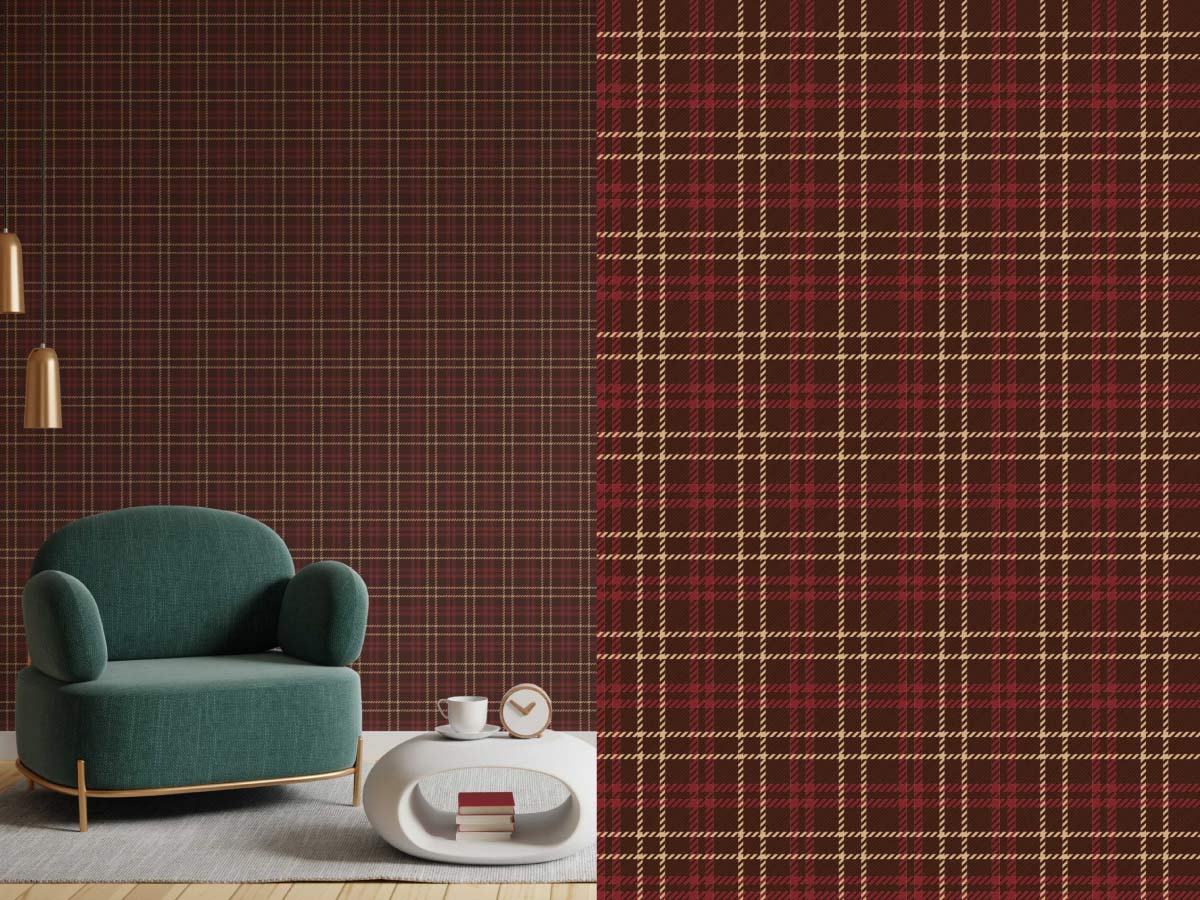
Cozy Plaid
A soft, woven wallpaper design combined with earthy tones makes plaid an effortless addition to a Dark Academia interior. Inspired by traditional textiles, this pattern subtly mimics the texture of wool or tweed, giving the walls a tactile, more structured feel than other designs.
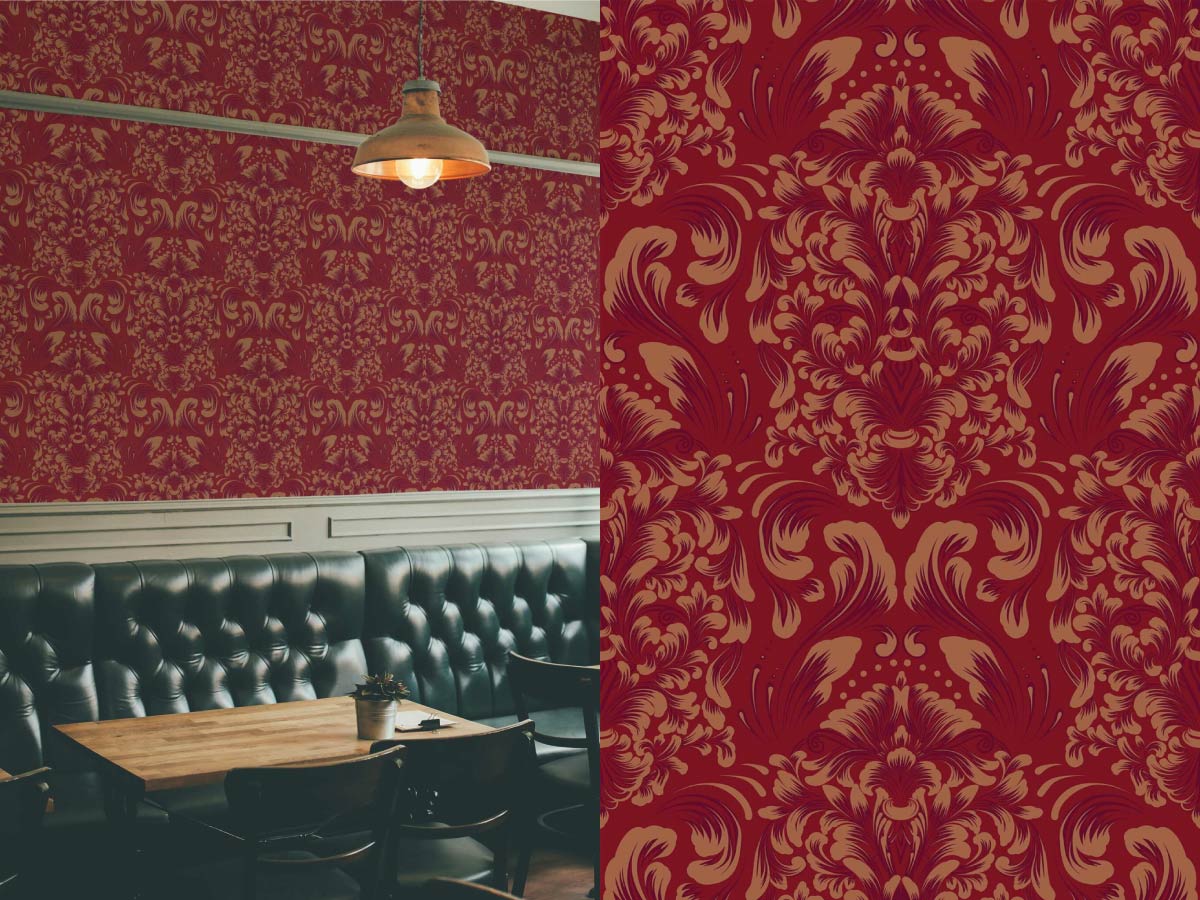
Burgundy Elegance
A rich burgundy background paired with a classic damask pattern instantly transforms a space into something regal, evoking historic manors and grand interiors.
This classic, antique-inspired design works beautifully in a study, enhancing the scholarly mood, or in a formal dining room, elevating the ambiance. It also makes a striking statement in a living room.

Timeless Mood, Scholarly Elegance
Bring intellectual charm and dramatic warmth to your interior.
In Conclusion
Dark Academia is more than a passing trend. Unlike other designs or aesthetics, it hasn’t lost popularity since its inception. It also doesn’t experience traditional seasonal or holiday peaks. Dark Academia resonates in the fall because of the undertones of leaves, the gray atmosphere, the sense of mystery, and, of course, the start of the fall semester. It also suits the winter period, as exam season begins. The time of year for cozying up in front of a fireplace with a hot cup of tea. And of course, the start of spring and summer brings rain showers, early-morning mist as the sun rises, and new opportunities.
That’s why, if you’re concerned about keeping up with interior design trends and worried your home will age poorly, Dark Academy is the safest option to prevent this. Moody tones and heritage-inspired elements will naturally withstand time.